Sunday, February 9, 2020

The Moon Book

I see the moon and the moon sees me!


I remember Gail Gibbons being a staple in my childhood classrooms, which is partially why I was drawn to reread this book! Sure enough, this book made it clear why Gail Gibbons is vital author to have in any classroom library. The Moon Book by Gail Gibbons is an incredibly informative book that easily ties into any larger unit about outer space. It is full of facts that are sure to impress your students and answer many of the burning questions they may have about the moon. It's very organized, so it's easy to find the information you need. Because it's so chock-full of information, I'd suggest splitting it up into two or more readings, especially for younger elementary school students.

The gist:


The Moon Book details the moon's movements and phases and talks about how we've studied and explored it throughout history. It tackles common misconceptions held by students about the moon (does the moon change shape? Is it really made of cheese?) and covers nearly every question your students could have! From eclipses to tides, this book explores a wide range of topics, yet dives deeply into each one and easily integrates scientific terms. It's incredibly informative and a necessity to any unit about space.

My favorite part(s):


The illustrations are incredibly illuminating and make some tough concepts easy to understand. Many illustrations contain captions that highlight and explain vocabulary word. For example, this one makes it clear to students what the word "orbit" means.
Another thing I loved about this book is that it contains a few pages at the end that include extra fun facts, a timeline of "Moon Milestones" and a section on myths and legends surrounding the moon! I personally love learning about myths and legends in other cultures and I think that integrating other cultures into the classroom is really important.


What you can do:


The first grade classroom that I'm currently volunteering in just did a great unit on outer space. One activity was a huge success in particular: rocket building! Students brought in recyclables (paper towel and toilet paper rolls, old plastic containers, plastic forks, ect) and made their own rockets during one of our Language Arts rotations. They absolutely loved using what they'd learned about rockets to build their own and letting their creativity soar as they decorated them with markers and tin foil. I was impressed by how many students told me about various more technical parts of their rockets, like why their rocket had detachable boosters or needed an aerodynamic, cone-shaped nose.

Here's a great lesson plan that actually uses The Moon Book! It's mostly based on a KWL (know, want to know, learned) approach, which is a great way to access students' schemas. This lesson plan provides some great ideas on questions to ask your students and (my favorite part) it includes a nice song about the moon as a warm up to the lesson which is a great way to engage students and sneak in some learning in a fun way!

Want more? Here's another great lesson plan that incorporates The Moon Book! Feel free to mix and match activities and worksheets from both of the lesson plans in order to create one that's perfect for your particular classroom.

Happy Reading!


Gurgles and Growls: Learning About Your Stomach

When we eat food, what happens to it? 


Gurgles and Growls: Learning About Your Stomach by Pamela Hill Nettleton and illustrated by Becky Shipe answers that very question! This book is a great introduction to the digestive system for our younger elementary school friends. It uses simple language to break down a complicated system and is a good way to kick off a unit about the human body!


The gist:


Gurgles and Growls: Learning About Your Stomach is a great introduction to the digestive system. It narrates how the digestive system turns food into energy and contains simple but informative illustrations that help students conceptualize what exactly is going on in their stomaches.

The book finishes by talking about the importance of eating fruits and vegetables. This can be used as a great segue to talk about nutrition with your students! With obesity continually on the rise around the world, it's a good idea to talk to students about the importance of eating healthy.

My favorite part:


This book uses very simple language and has informative illustrations, which means it's a great resource for Kindergarten and 1st grade! However, 2nd grade and up probably requires a book that uses more technical terms and goes deeper into the digestive system.

What you can do: 


The human body is an incredible topic to tackle as a class because there's so much to learn and so many fun activities out there to facilitate learning! The book suggests some additional resources, including other books and the Fact Hound website. The website links to three other websites that provide ample information on the digestive system and how to talk about it with students. Click here to access the Fact Hound website.

The book also suggests one activity, where students get to "be" a stomach by putting food in a plastic baggie and mashing it up. This lesson plans walks through a similar activity very thoroughly and provides some good questions to get your students thinking.

Speaking of activities, click here to view an incredible blog with lots of different activities that incorporate the digestive system! There's a suggested math activity, a science experiment, and even a fun song you can teach your students! I'm so happy that I stumbled upon this blog and will definitely be checking in out again for other lesson plan ideas!

Happy Reading!

A Tower of Giraffes: Animals in Groups

Have you herd about this book?


A Tower of Giraffes: Animals in Groups by Anna Wright was just too gorgeous for me not to review! This book explores social groups of animals and the (often) silly words we use to describe them. It's a beautiful book to supplement a unit on animals or discuss the concept of collective nouns. Plus, it lends itself well to a fun, follow-up art activity!


The gist:


A Tower of Giraffes: Animals in Groups details collective nouns used to describe groups of animals. The book highlights the unique words that we use, like "a parcel of penguins" or a "prickle of hedgehogs." It talks about the various social needs of animals and provides some more information on their lives and routines.  This book can be used as a fun supplement to a unit on animals or to explore the concept of collective nouns.

My favorite part:


It's gorgeous. As a lover of interior design and fabrics, Anna Wright often brings a unique style into her books. This book is no different. The bodies of the animals are decorated with watercolors, fabric and feathers, creating an array of stunning textures and patterns. One of my personal favorites is the flock of sheep, which are decorated with various patterns of knit yarn! How clever is that?


What you can do:


This book can be worked into a larger unit on animals and can easily be followed by a fun art activity where students make collages! I think it would be a blast to have students draw their own group of animals, whether it be a "herd of elephants" or a "romp of otters," and then decorate them with various materials (fabric, yarn, feathers, even magazine clippings). Fabric stores typically sell scraps cheaply, so it'd be easy to pick up a few patterns with various textures for students to use. An activity like this would allow students to be incredibly creative and surely be lots of fun! 

Reading is Fundamental provides some great suggestions on what to do with your students when reading this book, including discussion questions and follow up STEM activities. Click here to visit their website and see what resources they provide.

Love this book and want more? Here's another book worth checking out! Though I haven't read An Ambush of Tigers: A Wild Gathering of Collective Nouns by Betsy Rosenthal, it sounds very engaging. Similar to A Tower of Giraffes: Animals in Groups, it explores the wacky words we use to describe groups of animals. However, this book uses rhymes and humorous illustrations to catch readers' attention and has gotten great reviews from students and teachers alike. I'll definitely be adding it to my list of books to read!

Happy Reading!

Thursday, February 6, 2020

She Persisted Around the World

Who run the world? Girls!


March is nearing quickly and with it comes Women's History month! Celebrate the contributions of women throughout history with the book She Persisted Around the World, written by Chelsea Clinton and illustrated by Alexandra Boiger. It's an empowering book that tells the story of 13 women around the world, who's persistence changed history.

This book is a little more advanced than some of the other books I've chosen to write about, but it's so great I just couldn't help but include it! That said, I would say it's probably best suited for second grade and up.


The gist:


She Persisted Around the World highlights 13 women who changed history around the globe. These women broke barriers in science and sports, arts and activism, poetry and politics, and more. Despite discrimination and constant challenges, these women persevered and made a difference in their communities. Each profile talks about where the women came from, what challenges they faced, how they overcame them and why what they did made the world a better place.

This book is a great opportunity to talk to students about gender inequality, past and present, and the importance of perseverance.

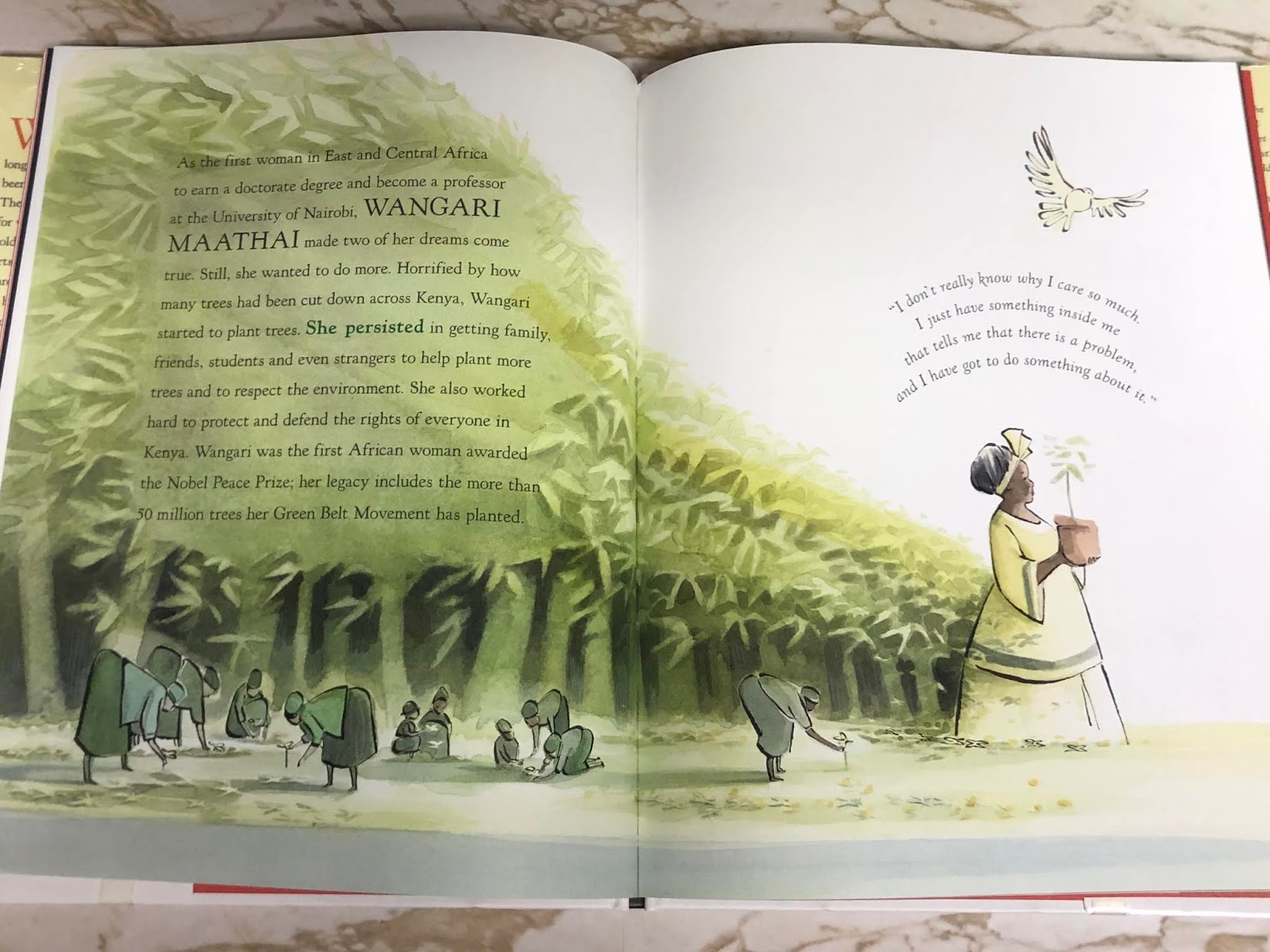
What's more is the illustrations are gorgeous! Each page has a new color scheme with colors that pop off the page. This portrait of Malala Yousafzai is one of my favorites!

The book highlights Sor Juana InĂ©s de La Cruz, Caroline Herschel, Kate Sheppard, Marie Curie, Viola Desmond, Mary Verghese, Aisha Rateb, Wangari Maathai, J.K. Rowling, "Sissi" Lima do Amor,  Leymah Gbowee, Yuan Yuan Tan, and Malala Yousafzai.


My favorite part(s):


The diversity! In schools we often have a very narrow view of history. Rarely do we talk about influential figures in other countries (and especially rarely do we talk about about figures that aren't European). She Persisted Around the World does a great job of highlighting incredible women who often overlooked in the dominant narrative of history. There are women in this book who'd I'd never heard of before, and I'm so excited to learn more about them!

I also love the intersectionality! This book highlights many aspects of identity and doesn't just highlight women who fought for feminist causes. For example, both the sections on Mary Verghese and Aisha Rateb also include mention of disability. Although intersectionality might be a bit of a tough concept to tackle with elementary school students, this book could prompt a great discussion with students on their identity!


What you can do:


Talk to your students about a time that they've persisted through a challenge. What happened? Why did they persist? How did they feel afterward? Have them write about it and share with a partner.

Choose one of the highlighted women and create an interdisciplinary lesson that dives deeper into her story! For example, for Wangari Maathai, you could talk to students about environmentalism and resources that come from the earth. You can talk about how seeds grow or why trees are important. I can just imagine how happy students would be carrying home a little seedling that they've planted after having discussed how plants grow and Wangari Maathai!

Organize a lesson or two to celebrate Women's History month! Click here to check out some fun ideas for activities to do with your students.

Double check your teaching practices. Studies show that teachers treat their male and female students differently. Do you?  Click here to read a quick article about gender equality in the classroom and what you can do it promote it.


Happy Reading!


Wednesday, February 5, 2020

In My Backyard: Moles

The In My Backyard Books by Kate Riggs and Lindsy J. O'Brien are perfect for your budding naturalists!


Kids always want to know more about their surrounding environment and animals tend to be especially intriguing for them. The In My Backyard books by Kate Riggs and Lindsy J. O'Brien highlight some of the animals that kids are most likely to encounter— the ones that are in their backyard! This collection of books covers six topics: chipmunks, frogs, mice, robins, squirrels and of course, moles.

In My Backyard: Moles caught my attention because I remember my classmates and I going through an obsession with moles in first grade. Weird? Yes. But understandable? Also yes! Moles are incredible little creatures!

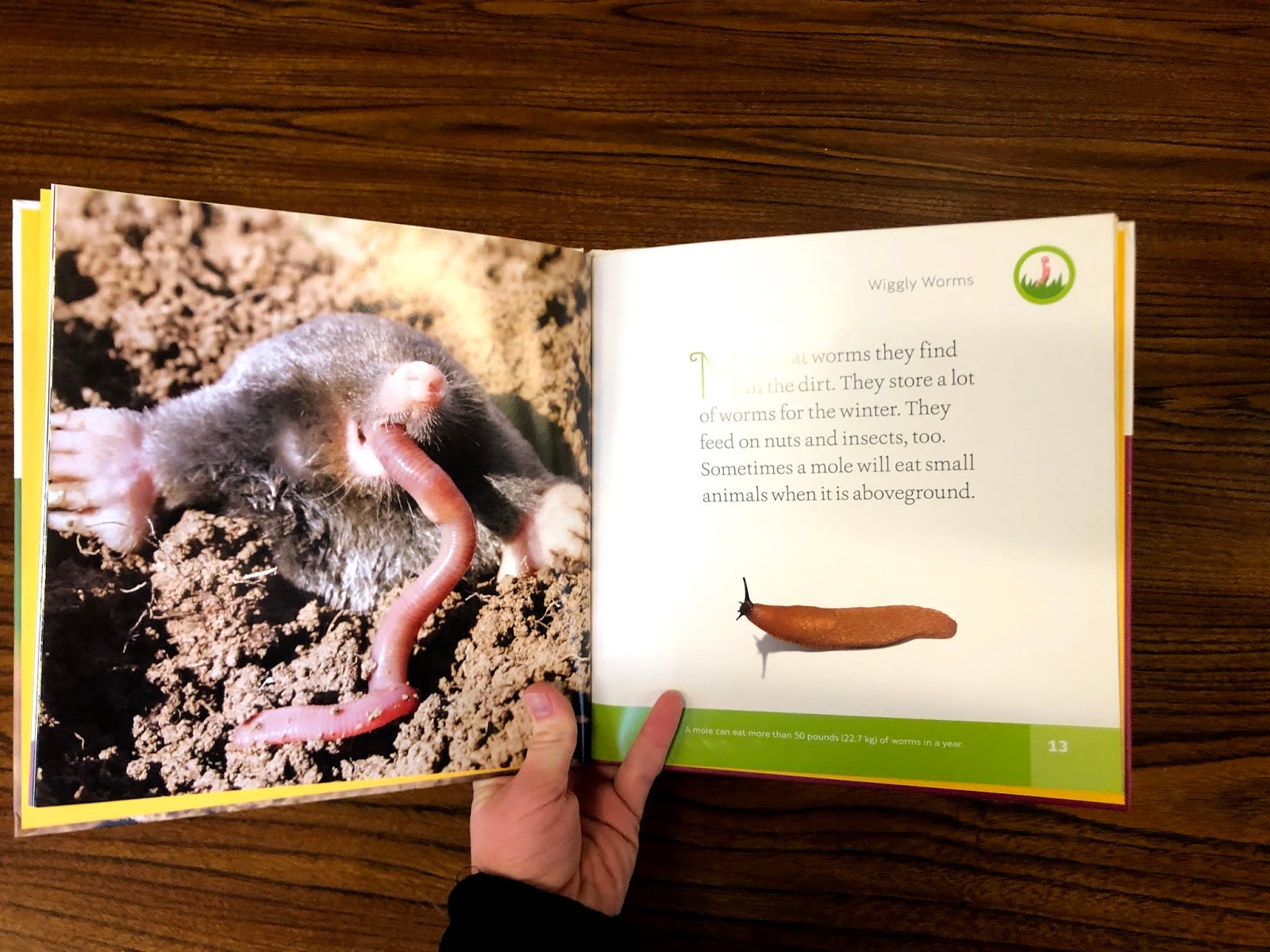
They might be almost blind, but they live vibrant lives! They're cute, they're furry, and they can eat more than 50 pounds of worms in a year!


The gist:


In My Backyard: Moles is a great book to tie into a lesson about your local biodiversity! This book is an introduction to the life cycle of moles and includes information on their physical attributes, their diets, the tunnels in which they live and their predators. Its stunning, high-quality photographs of various species of moles are sure to capture your students' attention. The text uses simple language and highlights new vocabulary for easy discussion with students. In addition to the main text, there are fun-facts on the bottom of every page! It's a winner in my book (haha), and I'll be sure to check out the other books in the In My Backyard series!

My favorite part: 


The book ends with a suggested activity that can easily be adjusted for your classroom. It also includes websites for additional mole-related activities and resources!


Thursday, January 30, 2020

Welcome!

Welcome to my blog!


This blog will become a collection of great books to share with our friends in Elementary School! I will begin posting shortly, but for now, here's some other blogs and sites to check out!


  • Chronicle Books is a great place to find books that you may not find elsewhere. Better yet, with just a few clicks, you can purchase their books and send them straight to your door! Click here to see books best suited for 6-8 year olds!
  • At Gecko Press you can find beautiful picture books and chapter books for your young reader. Click here to check out the picture books, here to see their chapter books, and here to learn about their "All You Can Eat" subscription service for children aged 5-12!
  • Looking for books on a budget? Then the Free Children's Books might be for you! You can download PDFs of children's books for free! The best part? You can sort the books by themes, like culture or bullying, to easily add material to your lessons. Click here to check them out!

That's all for now!

Happy Reading!